


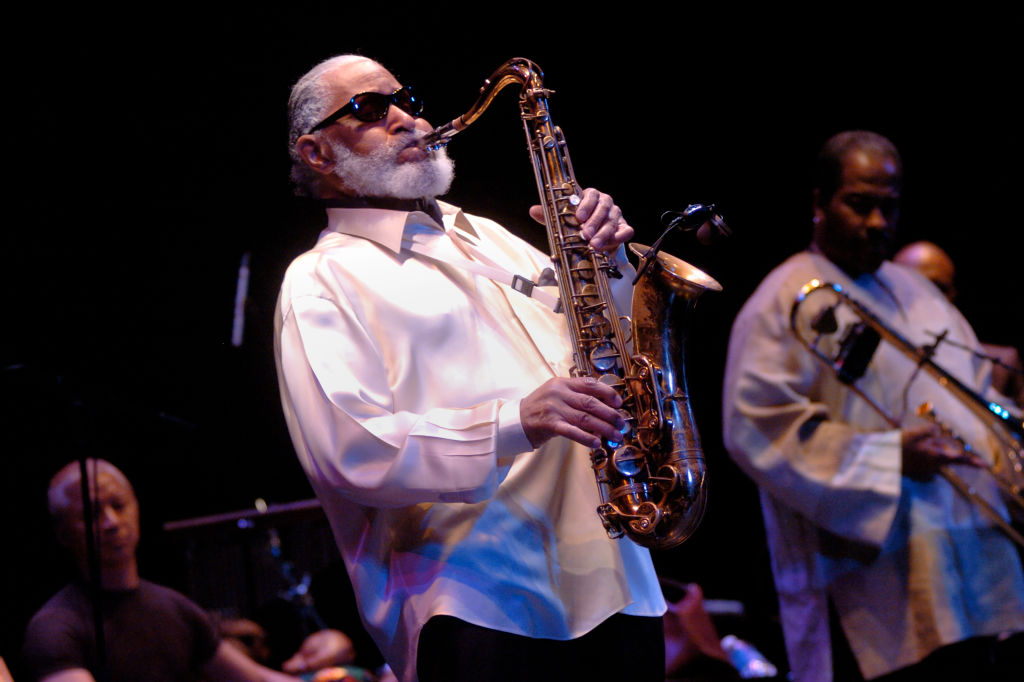
Sonny Rollins, who first established himself throughout the jazz scene within the Nineteen Forties, stood as one of many final residing legends of his period. Sonny Rollins died on Monday (Might 25), abandoning a wealthy legacy as a real colossus of the saxophone.
Through Sonny Rollins’ web site, the information of the jazz legend’s passing was shared together with a quote from Rollins himself.
From www.sonnyrollins.com:
It’s with deep sorrow and profound love that we announce the passing of Sonny Rollins. The Saxophone Colossus died Might 25, 2026 at his residence in Woodstock, NY on the age of 95.
“I feel when the artistic individual ends, he continues within the subsequent existence. I’m an individual who believes this life isn’t the be-all and end-all of every part. A religious individual doesn’t really feel like that.”
–Sonny Rollins (2009)
Rollins was born Walter Theodore Rollins on September 7, 1930, in New York Metropolis, N.Y., and raised primarily in Harlem. Whereas in highschool, Rollins was mentored by legendary pianist Thelonious Monk, however later switched to saxophone after being impressed by Louis Jordan.
Graduating from highschool in 1948, Rollins started taking part in professionally and immersed himself within the bebop scene. Rollins was concerned in a theft, spending just below a 12 months in jail on the notorious Rikers Island facility within the early Nineteen Fifties. Right now, Rollins recorded with Miles Davis, his mentor Monk, and Charlie Parker.
Rollins struggled with habit round this time however sought therapy, which led to higher alternative on the taking part in entrance. Whereas a member of the quartet that includes Max Roach and Clifford Brown, Rollins started to chart his personal course.
In 1956, Rollins launched his basic album, Saxophone Colossus, at the time his sixth studio album by this level. In the direction of the top of the last decade, Rollins took time away from music and achieved notoriety between 1959 and 1961 for infamously working towards his craft on the pedestrian walkway of the Williamsburg Bridge, catching the ear of journalist Ralph Berton, who revealed a narrative in Metronome journal about Rollins.
Rollins loved a profession revival of types all through the Sixties, naming his 1962 album The Bridge as his comeback effort. He would then take one other sabbatical in 1969 to review yoga and take up meditation for a two-year interval.
Returning to music in 1971, Rollins went on a artistic spree and reaffirmed his free-flowing taking part in type, with some dubbing him a grasp of improvisational taking part in. Because the many years rolled on, Rollins remained a prolific recording artist and devoted performer who used music as a automobile for his many private pursuits, together with defending the setting.
Rollins received a Grammy for his album, This Is What I Do, in 2002, and one other in 2006 for Greatest Jazz Solo. He was awarded a Lifetime Achievement Award from the Grammys in 2004. Rollins, who retired from performing and recording in 2014, was nominated in 2012 for Greatest Improvised Jazz Solo.
All through the course of his decades-long profession, Sonny Rollins impressed a lot of his contemporaries who carried out covers of his songs, and even discovered himself sampled by Hip-Hop artists such because the Digable Planets and Del The Funkee Homosapien, amongst others.
Rollins was 95.
—
Photograph: Getty